Tuesday, November 27, 2012

Tuesday, November 13, 2012
Proven: Echinacea Can Prevent and Protect Against Colds
Proven: Echinacea Can Prevent and Protect Against Colds


by Elizabeth Renter
November 3rd, 2012 | Updated 11/03/2012 at 2:22 am
November 3rd, 2012 | Updated 11/03/2012 at 2:22 am
 In another case of science proving what we already know, researchers recently revealed that the herbal remedy Echinacea can protect against colds. According to The Daily Mail, this was the largest clinical study ever on the herb, and it ended with some positive news—that the herbal remedy (taken for ages to reduce the effects of colds and illness) does, in fact, work.
Duration of Colds Dropped by 26% from Echinacea
Echinacea is native to the United States and comes from the Eastern Purple Coneflower.
Study subjects took three doses of the herb extract for four months and had a lower incidence of colds. Also, the average duration of colds dropped 26%, meaning that for those who did get sick, the illness moved on more quickly.
Unfortunately, the study used a very specific brand of Echinacea, called Echinaforce, and the maker of said supplement funded the study. This disappointing fact could lead supporters of mainstream (re: not herbal) medicine to discredit any of the promising findings of the study.
However, in addition to decreasing the longevity of colds and reducing their occurrence, researchers also found the herb to cut the number of recurrent colds in people with weakened immune systems by a whopping 60 percent.
It’s believed this herb works to combat viruses, meaning it could work on other illnesses as well. For the 750 study subjects, the herb also combated the flu—reducing the total number of days suffered from 850 to 672. Also, recurring infections fell from 100 episodes in 43 patients to 65 episodes in 28 patients, a reduction of 59 percent.
Similarly, a doctor of TCM (traditional Chinese medicine) in New Mexico recommended Echinacea for cold and flu prevention. Though he says the common mistake is to take it after coming down with a cold or flu because Echinacea is not as effective as a remedy rather than for flu prevention.
Echinacea has long been used to treat the symptoms of a cold and to shorten the duration. While daily supplementation might be a lot to ask, having high quality Echinacea tea or the herb itself on hand is a good idea during cold season. When you start to see people around you passing the bug, bolster your body’s defenses by consuming the herb throughout the day. And if you feel a cold coming on, start an Echinacea regimen right away.
For other helpful tips on how to prevent a cold, click the link. And in addition to knowing which measures to take for protection, it’s also good to know which foods to AVOID while battling a cold or flu.
Read more: http://naturalsociety.com/proven-echinacea-can-prevent-and-protect-against-colds/#ixzz2C7MxCWiE
Quit Smoking by Age 30, Reduce Risk of Early Death by 97%
Quit Smoking by Age 30, Reduce Risk of Early Death by 97%

by Lisa Garber
November 4th, 2012 | Updated 11/04/2012 at 2:44 am
November 4th, 2012 | Updated 11/04/2012 at 2:44 am

According to a University of Oxford study involving over a million women, quitting smoking by age 30 can significantly help the once-smoker avoid an early death. Those who quit by 40 can cut the risk by 90 percent.
The Million Women Study
The Million Women Study examined 1.3 million women in the UK, all between the ages of 50 to 65 between 1996 and 2001. All participants were categorized as current smokers (20 percent), former smokers (28 percent), or non-smokers (52 percent). Other health factors such as medical conditions, lifestyle, and social factors were taken into consideration.
Just three years after the survey, smokers were three times as likely to die over the next nine years as non-smokers. The UK’s National Health Service provided information on causes of death of any participants. Two-thirds of smoking participants died from smoking-related diseases like lung cancer, chronic lung disease, heart disease, and stroke.
The intensity and frequency of smoking also affected participants’ health. Just 1 cigarette a day doubled the risk of death. Quitting smoking by ages 30 and 40, however, slashed risk of disease and death by a shocking 97 and 90 percent.
The findings are in the same vein as those published in a recent edition of the journal Cancer. Reuters reports that:
Among smokers with stage 1 or 2 lung cancer, for instance, 72 percent survived at least two years, compared to 93 percent of the never-smokers and 76 percent of people who’d kicked the habit a year or more before diagnosis.
Additionally, among those with stage 4 lung cancer, 15 percent of smokers survived two years, 20 percent of former smokers did, and 40 percent of never-smokers survived. In older patients, former smokers who quit more than a year before their diagnosis were 30 percent less likely to die from stage 4 cancer than current smokers.
Read here on the immediate and long-term benefits of quitting smoking.
Current Research and Trying to Quit
The UK researchers attribute much of their findings to the processes and legacy of Sir Richard Doll, a forerunner in epidemiology who linked smoking to lung cancer. Much of what we know today about the effects of smoking is thanks to Doll. His methods—which the Oxford researchers adopted—involved randomized trials and large epidemiological studies.
If you’re one of the many people worldwide trying to break the habit, try adjusting your diet to make the process easier and quicker. These foods can help you feel fuller longer, decrease nicotine dependence, and can even worsen the taste of tobacco – ultimately helping you to quit smoking naturally.
Additional Sources:
Read more: http://naturalsociety.com/quit-smoking-by-age-30-avoid-early-death/#ixzz2C7JiniHt
Wednesday, November 7, 2012
Tuesday, October 16, 2012
Monday, September 17, 2012
Is Diet Soda Bad for You? 4 Major Negative Side Effects of Drinking DIET Soda
Is Diet Soda Bad for You? 4 Major Negative Side Effects of Drinking DIET Soda

Lisa Garber
NaturalSociety
September 17, 2012
NaturalSociety
September 17, 2012
 Americans consume almost 50 billion liters of soda annually. Keeping in mind that some sodas contain flame retardants in addition to a slew of unhealthy ingredients, it’s no surprise we spend so much on healthcare. And while consumers are beginning to realize that soda is indeed having a detrimental impact on their health, diet soda is turned to as an alternative solution. But is diet really better, or is diet soda bad for you? This is something millions of people need to know.
The artificial sweeteners, such as aspartame, added to diet soda make the widely chosen beverage a peculiar drink, and research of its potentially devastating effects are still in its infancy – although we still do know that this drink is the complete opposite of healthful. Consumers want to know: Is diet soda bad for you? Here are four negative side effects of drinking diet soda Coke and Pepsi don’t want you to know about.
Is Diet Soda Bad for You? Presenting…Kidney Problems
Harvard Medical School researchers studied over 3,000 women for 11 years and found that diet soda consumption had a positive correlation to kidney health decline. This was especially true if the women drank more than two diet sodas daily, but the same kidney damage was not recorded among women who drank sodas sweetened with sugar.
‘While more study is needed, our research suggests that higher sodium and artificially sweetened soda intake are associated with greater rate of decline in kidney function,’ says Dr. Julie Lin, who led the research.
Altered Metabolism – Heart Attack and Stroke
Drinking a single can of diet soda daily is associated with a 34 percent increased risk of developing metabolic syndrome according to a 2008 University of Minnesota study. Nearly 10,000 adults were used for the study, and many showed unhealthy levels of belly fat, upping the risk of heart attack and stroke.
Lead researcher Hannah Gardener and her team studied 2,564 adults aged 69 years or older over the course of 10 years. Over the course of the study, 591 men and women had a heart attack, stroke, or died of cardiovascular causes. Researchers found that diet soda consumption was linked to a 44 percent higher chance of heart attack or stroke, up from the 22 percent non-soda drinkers have.
Obesity
Consumption of artificial sugar may lower immediate calorie intake, but when the tongue tastes sweetness and the body receives no calories from sugar, Purdue University says it gets confused. Consequently, people drinking diet soda may eat more food at meals and may even subconsciously go scavenging between meals. Appropriately, two or more cans of diet soda consumption was associated with a 500 percent increase in waistlines according to a University of Texas health Science Center study.
Other research from Texas involving 474 individuals also shows consuming two or more diet sodas a day prompts an increase in waist size. In fact, the increase was a shocking six times greater than those who did not drink diet soda.
And Cell Damage
Drinking diet sodas even affects us on a cellular level. We can attribute this to diet sodas containing bizarre ingredients like mold inhibitors (not found in sugary sodas) often listed as sodium benzoate or potassium benzoate. Peter Piper of the University of Sheffield says these chemicals “have the ability to cause severe damage to DNA in the mitochondria to the point that they totally inactivate it.” Be wary of these ingredients if you want to steer clear of hives, asthma, and other allergic reactions, too.
To put the icing on the cake, it’s good for consumers to know that aspartame is also created using genetically modified bacteria, and has been linked to cancer. So, is diet soda bad for you? You decide.
For more on sodas, check out this telling infographic.
Additional Sources:
Yahoo Health
Read more: http://naturalsociety.com/is-diet-soda-bad-for-you-4-major-negative-impacts/#ixzz26iKHBbPo
Wednesday, July 18, 2012
Thursday, June 14, 2012
Quit Smoking Naturally by Consuming More of These Foods
Quit Smoking Naturally by Consuming More of These Foods
Mike Barrett
NaturalSociety
June 11, 2012
NaturalSociety
June 11, 2012
 Not every smoker is interested in quitting, but for those of you who are trying to quit smoking, implementing simple dietary changes may be the way to go. While smokers try everything from hypnosis to electronic cigarettes, research is showing that if you simply eat more fruit and vegetables, you may have an easier time staying tobacco-free for longer. The research should be of even greater interest to those who want to quit smoking naturally.
Quit Smoking Naturally
For the study, which was published online by University of Buffalo public health researchers, authors from UB’s School of Public Health and Health professions surveyed 1,000 smokers aged 25 and older from across the nation. Fourteen months after the survey, the authors followed up with the respondents to see if they stayed tobacco-free during the previous month.
What they found was that those who consumed the most fruit and vegetables were 3 times more likely to abstain from tobacco for at least 30 days than those consuming small amounts of fruit and vegetables. In addition, those consuming more fruit and vegetables smoked less often per day, waited longer before having their first daily cigarette, and scored better on a nicotine-dependent test.
“Other studies have taken a snapshot approach, asking smokers and nonsmokers about their diets,” says Gary A. Giovino, PhD, chair of the Department of Community Health and Health Behavior at UB. “We knew from our previous work that people who were abstinent from cigarettes for less than six months consumed more fruits and vegetables than those who still smoked. What we didn’t know was whether recent quitters increased their fruit and vegetable consumption or if smokers who ate more fruits and vegetables were more likely to quit.”
So how could increased consumption of fruit and vegetables help people to quit smoking naturally?
- Less nicotine dependence.
- High fiber content makes people feel fuller – since smokers sometimes confuse hunger with smoking urges.
- Unlike meats, alcohol, and caffeinated beverages, fruit and vegetables don’t enhance and may even worsen the taste of tobacco.
- Engaging in a healthier lifestyle could consciously and subconsciously cause smokers to further shift out of an unhealthy lifestyle involving smoking.
While not everyone wants to quit smoking, most agree that quitting can be extremely difficult. For those who want to quit smoking, and especially for those who want to quit smoking naturally, this research should be a positive boost. If you don’t want to quit, but want to want to quit, then see what happens when you quit smoking – it may be enough to ignite that mental shift you’re searching for.”We may have identified a new tool that can help people quit smoking,” says Jeffrey P. Haibach, MPH, first author on the paper and graduate research assistant in the UB Department of Community Health and Health Behavior. “Granted, this is just an observational study, but improving one’s diet may facilitate quitting.”
Additional Sources:
Read more: http://naturalsociety.com/quit-smoking-naturally-fruit-vegetables/#ixzz1xmKlcM3q
Monday, June 11, 2012
Ten Great Reasons to Eat More Fruit
Ten Great Reasons to Eat More Fruit
By: Frederic Patenaude
A
few weeks ago I came back from a trip to Hawaii. I hadn’t taken a real
vacation in a long time, so this was something I really needed. When I
left to Hawaii, it was the end of April and the weather was still fairly
miserable in Canada.
My wife and I
arrived in Honolulu on a bright sunny day and we were greeted at the
airport by my good friend Shelli, an awesome personal trainer I first
met in San Diego almost 15 years ago.
Shelli
brought us some pineapples and papayas so we would have something to
eat right away until we could shop the next day. When I got to the
hotel, I proceeded to devour an entire pineapple! I was so thirsty from
flying that I needed something juicy.
In
my entire time in Hawaii, I ate on average one pineapple a day. I
brutalized my tongue with an onslaught of the delicious acid fruit, but
fortunately Hawaii pineapples were ripe and not too acidic. I also did
not eat them all at once but throughout the day.
This, of course, was in addition to all the other fruit I ate when I was there!
When
I’m in the tropics, I find it easy to eat massive quantities of juicy
fruits. When I’m in a colder climate, I crave heavier fruits, like
bananas, and also temperate climate fruits, like apples, pears and
cherries.
I’ve been eating fruit in
massive quantities since 1997 and I believe it’s only helped my health.
All the health troubles I suffered in my years as a pure raw foodist
were not caused by eating fruit, but rather by eating:
- Too much fat
– Too much dried fruit
– Oil
– Complicated raw food recipes
– Insufficient quantities of fruit
– Too much dried fruit
– Oil
– Complicated raw food recipes
– Insufficient quantities of fruit
15
years later, my diet consists mostly of carbohydrates like fruit. My
teeth are doing great (no cavities), I’m getting in better shape every
year, and fruit is still the food that I love the most — as long as it’s
ripe and delicious.
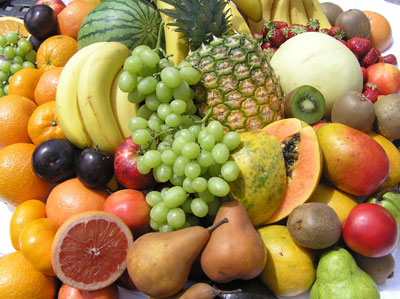
To all the naysayers that say fruit is evil, fruit is bad for you… consider these 10 good reasons to eat more fruit:
1. Fruit is the best carbohydrate
The
human being is meant to live primarily on a diet of carbohydrates.
That’s what all long-lived populations in the world eat, such as the
Okinawans in Japan (sweet potatoes), the Costa Ricans of the Nicoya
Pininsula (corn tortillas, beans, rice and fruit), the healthier Asian
populations (rice), the Hunzas (fruit), and the best athletes in the
world. Fruit is the best carbohydrate food because it is alkaline
forming (grains are slightly acid-forming, and animal foods are very
acid forming). It’s rich in vitamins and minerals and packed with
nutrients.
2. Fruit doesn’t require any seasonings
Fruit
is probably the only food that people love to eat in its natural state
without any seasonings. It’s perfect on its own. Who wants to add salt
and pepper to a papaya? A pineapple doesn’t need any dressing, and a
banana is perfect as it is.
3. Fruit is low in sodium
Fruit
is naturally low in sodium and because it doesn’t require any
seasonings, eating more fruit will help you lower the overall sodium
content in your diet. The more calories you get from fruit, the less
sodium-rich your diet will be. This will in turn lower your blood
pressure and keep you healthier.
4. Fruit is low on the glycemic index
It’s
a myth to think that fruit quickly raises blood sugar. In reality,
fruit is low on the glycemic index. While a piece of white bread has a
glycemic index of 95 (high), a banana is 54 (low), a peach is 42 (low),
and grapes are 46 (low). Only a few fruits, such as dates, have a high
glycemic index (103 for dates). The reason why fruit is so low on the
glycemic index is that fruit contains a combination of sugars: fructose,
sucrose and glucose. Each sugar is assimilated at a different rate.
Fruit also contains plenty of fiber, which slows down the assimilation
of sugar. In this sense, fruit is the perfect energy food. It contains
some sugar that is assimilated immediately, giving you instant energy,
and some that are assimilated slowly, giving you long-term energy.
5. Fruit is hydrating
Fruit is so full of water that it’s not only a food in itself. It’s a drink! Many fruits are over 90% water.
6. Fruit is fast food
Fruit
can be easy and quick to eat. What could be easier than peeling a mango
and eating it? Or biting on a ripe peach? Almost all fruits are
conveniently packed, wrapped in their own mother-nature containers we
call peels, and ready to be consumed. There are a few exceptions though,
such as the spiky durian, or the giant jackfruit, whose skin is full of
a sticky substance similar to glue!
7. Most long-lived cultures eat fruit
The
Hunzas, who for a while were reputed to be some of the longest-lived
people in the world, probably ate more fruit than most cultures in the
world. Although fruit can be a delicacy in many cultures, most
long-lived cultures in the world today and long-lived people anywhere
typically eat a lot of fruit. For each centenarian we can find that
smokes constantly and eats a junk food diet, you’ll find many more that
eat plenty of fruit.
8. Fruit is packed with antioxidants
Fruit
is packed with cancer-fighting antioxidants — so much that many
companies are trying to concentrate this goodness into expensive fruit
juices and pills. Almost all of the anti-aging compounds that are the
most effective are found in fruit. Think of the reputed richness of
antioxidants in blueberries, pomegranate juice, açaí berries, and the
tropical mangosteen. Colored fruits are almost always packed with
healthy compounds we are only beginning now to research and understand.
9. Fruit keeps you lean
Fruit
is the perfect weight loss food. Just eat a large apple before any
meal, and it will fill you up and prevent you from overeating at the
table. Fruit is filling because it’s filled with fiber and water, yet it
is low in calories. Fruit, on average, contains 250 calories per pound.
On the other hand, bread contains 1200, starches are 500, and nuts are
2800! Only vegetables have a lower caloric density than fruit. That
means you can fill up on fruit and be certain to never get fat!
10. Fruit Makes You Beautiful
David
Wolfe, who published my first book The Sunfood Cuisine, used to say
that beautiful people eat a lot of fruit. Research has shown that
certain compounds in fruits and vegetables, like carotenoids, help the skin look more vibrant and beautiful.
One research even showed that people who eat a lot of fruits and
vegetables are considered more attractive because the carotenoids gives
the skin a healthy natural “tan” look. Just make sure you don’t drink
too much carrot juice though, otherwise your skin might turn orange!
You
don’t have to become a fruitarian to get the benefits of fruit. Start
eating more fruit today, beginning with your favorite one! My favorites
include pineapple, white peaches, Hawaiian papaya, Rainier cherries,
just to name a few.
What about you?
About the Author
Frederic Patenaude has
been working in the natural health movement for over 8 years, and has
over 10 years of experience in the field of nutrition, health and
personal development. He is the author of several books and his articles
are read by tens of thousands of people every week, in
various on-line newsletters.
Frederic also wrote and published the book The Raw Secrets: the Raw Food Diet in the Real World,
which is widely recognized as one of the best and most practical,
down-to-earth books on the subject. He also created several recipe
books, over a dozen courses and information products, and hundreds of
articles that have been published online and offline.
Thursday, June 7, 2012
Have You Tried The Happiness Diet?
Have You Tried The Happiness Diet?
Many diets make us unhealthy and unhappy. We all share a feel-good chemistry with food.The only way to really be healthy is to eat foods that make you happy. It eventually becomes part of your everyday life. You start to feel better and look better. A new weight-loss plan undertakes to get rid of the flab as it enhances the mood. Say hello to the Happiness Diet, that's influenced by how you feel...

Serious mood disruptors in our diets include sugars, sweeteners, processed grains, additives, artificial flavors, preservatives, food enhancers and adulterators. If you've ever gone off a fast food binge and then back on again, you'll know exactly what we're talking about.
These foods can make us depressed. Also, if you have just focused on getting thin by having a low-fat, low-calorie diet, you have failed, it adds. The explanation is that a weight-loss plan that cuts fat is a recipe for failure, without the natural mood-boosters vitamin B12, magnesium and conjugated linoleic acid. If the food does not have the above, we are less likely to feel happy and in turn, successful.
What Works
According to the theory, a diet that is rich in good fats, such as olive oil, as well as whole grains, vegetables and quality fish can benefit, by feeling more satisfied, one will lose weight effortlessly. Researchers say that the modern American diet (MAD) has an unhealthy focus on sugars, refined carbs and industrial vegetable fats, and leads people to feeling fat and depressed.
The 5 Essentials of the Happiness Diet:
1. Iodine: This is essential for a healthy thyroid. An underactive thyroid is linked with low energy, poor memory, depression, ADHD, migraine, weight gain, infertility, breast disease (including cancer), infection, and heartdisease.
Sources: Fish, eggs, sardines and potato skin.
2. Calcium: This dairy pick is a primary mood decider. The right calcium levels are said to give the 'go' command, preparing the body to release feel-good neurotransmitters. And disturbances in calcium levels cause anxiety, depression, irritability and impaired memory. A deficiency of calcium can create a hormonal imbalance that adds to weight gain and makes women suffer PMS symptoms.
Sources: Yogurt, cheese, cabbage, spinach and almonds.
3. Magnesium: A mineral that is known to comfort and ease the mind and nerves, magnesium is a must-have. It has been known to treat clinical depression. A deficiency of this can lead to depression, anxiety, insomnia, and fatigue.
Sources: Green leaves, salmon, sunflower seeds and beans.
4. Vitamin D: Get enough sun! Sunshine converts cholesterol in our skin into vitamin D and not only does it feel good on the skin, it also raises immunity. A lesser level of vitamin D is also linked to several forms ofcancer and as well as including depression and dementia. Researchers have pointed out that one reason we get sick in the winter months is because of the lesser exposure to the sun during that time.
Sources: Sunlight and fish.
5. Fiber: Foods are huge mood boosters. They add to weight loss and lead to fewer mood swings in a person. In addition to this, fiber reduces overall inflammation and helps avoid spikes in blood sugar and insulin, and they also cleanse the intestinal tract. Studies have shown that diets that are low in fiber are linked to depression and increased risk of suicide.
1. Iodine: This is essential for a healthy thyroid. An underactive thyroid is linked with low energy, poor memory, depression, ADHD, migraine, weight gain, infertility, breast disease (including cancer), infection, and heartdisease.
Sources: Fish, eggs, sardines and potato skin.
2. Calcium: This dairy pick is a primary mood decider. The right calcium levels are said to give the 'go' command, preparing the body to release feel-good neurotransmitters. And disturbances in calcium levels cause anxiety, depression, irritability and impaired memory. A deficiency of calcium can create a hormonal imbalance that adds to weight gain and makes women suffer PMS symptoms.
Sources: Yogurt, cheese, cabbage, spinach and almonds.
3. Magnesium: A mineral that is known to comfort and ease the mind and nerves, magnesium is a must-have. It has been known to treat clinical depression. A deficiency of this can lead to depression, anxiety, insomnia, and fatigue.
Sources: Green leaves, salmon, sunflower seeds and beans.
4. Vitamin D: Get enough sun! Sunshine converts cholesterol in our skin into vitamin D and not only does it feel good on the skin, it also raises immunity. A lesser level of vitamin D is also linked to several forms ofcancer and as well as including depression and dementia. Researchers have pointed out that one reason we get sick in the winter months is because of the lesser exposure to the sun during that time.
Sources: Sunlight and fish.
5. Fiber: Foods are huge mood boosters. They add to weight loss and lead to fewer mood swings in a person. In addition to this, fiber reduces overall inflammation and helps avoid spikes in blood sugar and insulin, and they also cleanse the intestinal tract. Studies have shown that diets that are low in fiber are linked to depression and increased risk of suicide.
The Local Air Pollution In Your City Is Linked To Local Rates of Heart Disease
The Local Air Pollution In Your City Is Linked To Local Rates of Heart Disease
Air pollution, a serious danger to the environment, is also a major health risk, associated with respiratory infections, lung cancer and heart disease. Now a Tel Aviv University researcher has concluded that not only does air pollution impact cardiac events such as heart attack and stroke, but it also causes repeated episodes over the long term.

Cardiac patients living in high pollution local areas were found to be over 40 percent more likely to have a second heart attack when compared to patients living in low pollution local areas, according to Dr. Yariv Gerber of TAU's School of Public Health at the Sackler Faculty of Medicine. "We know that like smoking cigarettes, pollution itself provokes the inflammatory system. If you are talking about long-term exposure and an inflammatory system that is irritated chronically, pollution may well be involved in the progression of atrial sclerosis that manifests in cardiac events," explains Dr. Gerber.
Done in collaboration with Prof. Yaacov Drory and funded by the Environmental and Health Fund in Jerusalem, the research was presented at the San Diego Epidemiological Meeting of the American Heart Association in March and the Annual Meeting of the Israeli Heart Society in April.
Risking recurrence
Air pollution has previously been acknowledged as a factor in heart attack risk, as well as other health risks. The goal of this study, says Dr. Gerber, was to quantify that association and determine the long-term effects of air pollution on myocardial infarction (MI) patients. Their study followed 1,120 first-time MI patients who had been admitted to one of eight hospitals in central Israel between 1992 and 1993, all of whom were under the age of 65 at the time of admittance. The patients were followed up until 2011, a period of 19 years.
Air quality was measured at 21 monitoring stations inareas where the patients lived, and analyzed by a group of researchers at the Technion in Haifa. After adjusting for other factors such as socio-economic status and disease severity, the researchers identified an association between pollution and negative clinical outcomes, including mortality and recurrent vascular events such as heart attack, stroke and heart failure.
Compared to patients who lived in areas with the lowest recorded levels of pollution, those in the most polluted environment were 43 percent more likely to have a second heart attack or suffer congestive heart failure and 46 percent more likely to suffer a stroke. The study also found that patients exposed to air pollution were 35 percent more likely to die in the almost 20 year period following their first heart attack than those who were exposed to lower levels of pollution.
According to Dr. Gerber, the true impact of air pollution might be even stronger than this study shows. "Our method of assessing exposure does have limitations. Because we are using data from monitoring stations, it's a crude estimate of exposure, which most likely leads to an underestimation of the association," he warns. He estimates that air pollution could have double the negative impact with more precise measurement.
Identifying vulnerable groups
The results of the study not only indicate a health benefit for a public policy that curtails air pollution caused by industrial emissions and second hand smoke, but also call for heightened awareness by clinicians. Doctors should be making their patients aware of the risks of remaining in high pollution areas, suggesting that they work to limit their exposure, Dr. Gerber suggests.
Another purpose of this study was to begin identifying populations that are vulnerable to MI and re-occurring MI. Establishing the connection between air pollution and long-term risk for patients with cardiovascular diseases was an important step towards that goal.
Wednesday, June 6, 2012
Sheryl Crow: Brain tumor is a 'bump in the road'
Sheryl Crow: Brain tumor is a 'bump in the road'
June 6, 2012 -- Updated 1152 GMT (1952 HKT)


Sheryl Crow: Lyric lapse led to tumor find
STORY HIGHLIGHTS
- Sheryl Crow says she has a noncancerous tumor
- She will have periodic scans to monitor the growth
- "I'm good -- really!" Crow writes on her Facebook page
"Please don't worry about
my 'brain tumor,' it's a noncancerous growth. I know some folks can
have problems with this kind of thing, but I want to assure everyone I'm
OK," she wrote on her Facebook page.
Crow, a breast cancer
survivor, spoke to CNN Chief Medical Correspondent Sanjay Gupta, a
practicing neurosurgeon, about the diagnosis.
She told him the tumor
was discovered months ago. Crow doesn't need surgery but will have
periodic scans to monitor the growth, she told Gupta.
According to the singer's representative, Crow was diagnosed with meningioma, a common type of brain tumor.
Elizabeth Taylor had one; so did Mary Tyler Moore, said Gupta.
"It's a tumor that
typically grows between the outer layer of the brain and the brain
itself. So it's not actually inside the brain," he said.
Depending on their size,
some people will have their tumors removed right away. Some, like Crow,
take the wait-and-see approach, while others might never need an
operation or treatment.
"Really appreciate
everyone's love and concern, I feel so blessed to have the support of
all my fans, but I'm good -- really!" wrote Crow.
Tuesday, June 5, 2012
Coke - $KO - bottles may require cancer warning label if drink ingredients not changed
Coke - $KO - bottles may require cancer warning label if drink ingredients
not changed
Back in January, the state of California added to its list of cancer-causing chemicals an ingredient
commonly used in flavored soda beverages, which has sent major shockwaves throughout the
processed food industry. And according to numerous reports, Coca-Cola, PepsiCo, and even
Whole Foods are having to alter their soda beverage recipes in order to avoid being required
by the state of California to label their products as causing cancer.
The cancer-causing chemical in question is 4-methylimidazole, or 4-MI, a byproduct formed during
the production of caramel color, an additive commonly used in processed cola beverages.
According to the Center for Science in the Public Interest (CSPI), caramel color produced using
ammonia or ammonia-sulfites creates both 4-MI and 2-MI (2-methylimidazole), which have been
shown to be carcinogenic (http://cspinet.org/new/pdf/caramel_coloring_petition.pdf).
CSPI last year petitioned the U.S. Food and Drug Administration (FDA) to remove its
"Generally Recognized as Safe" (GRAS) status from caramel colors produced in this way,
but the FDA refused, insisting that caramel color with 4-MI is safe. But Californians apparently
believe otherwise, as they overwhelmingly voted to have 4-MI added to the list of toxic substances
covered under California's Safe Drinking Water and Toxic Enforcement Act of 1986, also known
as Proposition 65.
As a result, corporate beverage giants are having to change the way they produce caramel color
in order to maintain levels of 4-MI that are below the threshold limit. In the process, they are having
to spin the story publicly to make it seem as though 4-MI is not dangerous, and that altering the
beverage formulas will not change the taste, color, or consistency of their beverages.
But a 2008 study published in the journal Archives of Toxicology found that 4-MI is toxic, and that
it is linked to causing clonic seizures, hyperactivity, impaired gait, chronic inflammation, focal fatty
change in the liver, carcinoma, leukemia, and adenoma, among other conditions. The study
essentially confirmed that 4-MI is carcinogenic (http://www.ncbi.nlm.nih.gov/pubmed/17619857).
If it is possible to make caramel color without 4-MI,why have beverage producers continued toknowingly produce the toxic variety?In a public statement, Coca-Cola denied that 4-MI is carcinogenic, and openly called the cancer
warning mandate "scientifically unfounded." But the science speaks for itself, particularly in
beverage products made by Coca-Cola and PepsiCo that have been shown to have high levels of
both 2-MI and 4-MI. CSPI covered this extensively in its petition to the FDA:
http://cspinet.org/new/pdf/caramel_coloring_petition.pdf It is no big secret, in other words, that 4-MI is an "undesirable" byproduct of the caramel color
manufacturing method long-used by both Coca-Cola and PepsiCo. And yet these companies have
continued to rely on this method, despite obvious awareness about its toxicity, even though
less-toxic methods were most obviously a viable alternative.
The CSPI report names Coca-Cola, PepsiCo, Dr. Pepper Snapple Group Inc.'s Dr. Pepper, and
Whole Foods' 365 Cola as having unsafe levels of 4-MI that will have to be reformulated. The same
report says the amounts of 4-MI contained in these beverages before the reformulation is
responsible for causing roughly 15,000 cancers in the U.S. every year.
Sources for this article include: http://www.independent.co.uk |
(Source: NaturalNews)
4 Natural Liver Cleansing Foods
Liver health is directly tied to your overall health, and poor liver health could very well be the root cause of many diseases that currently affect millions of people worldwide. Often assaulted with toxic substances like high-fructose corn syrup, which can ‘overburden’ the liver and subsequently lead to complications, it is very likely that your liver has experienced at least some degree of damage due to dietary and environmental factors. In fact, the only way to avoid the buildup of toxins in the liver would be to eat a nearly perfect diet free of additives, fillers, modified ingredients, or chemicals — virtually the opposite of the average American diet, which critically lacks any liver cleansing foods.
Thankfully, it is very possible to repair your liver naturally and help release excessive toxin buildup through the power of healing foods. Here are 5 natural liver cleansing foods:
1. Cleanse Your Liver with Avocados
Avocados have been shown to naturally protect and repair your liver. Containing a high amount of glutathione-producing compounds, avocados can actually help boost the ability of the liver to cleanse itself. Astonishing research has even shown that consuming one or two avocados per week for as little as 30 days can make a serious difference in the state of your liver health. The best part? Avocados can be enjoyed with virtually any meal, and are available throughout the world. Try adding in some fresh, organic avocados with your next meal to reap the benefits of liver cleansing foods like this one.
2. Garlic
The superfood garlic, which is known for its ability to fight against cancer and infections naturally, is also among the many great liver cleansing foods as it is very useful in repairing a compromised liver. While the benefits of garlic for liver health and beyond are many, one reason for its superior effects have to do with the fact that garlic contains numerous sulfur-containing compounds that are known to activate the liver enzymes responsible for expelling toxins from the body. Another lies in the presence of both allicin and selenium, two important nutrients that play an integral role in the protection of the liver from damage.
3. Turmeric
Turmeric can uniquely assist the enzymes that are responsible for flushing out known dietary carcinogens. The result is enhanced protection against liver damage, and even regeneration of affected liver cells. Turmeric is also notably responsible for improving the health of the gallbladder as well. These benefits are in addition to the shocking ability to turmeric to combat cancer in a number of studies. Researchers at the UCLA also found that curcumin — the ‘key’ compound within turmeric — exhibits cancer-blocking properties. The lab found that the enzymes in the patients’ mouths responsible for promoting cancer spread and growth were inhibited by curcumin supplementation. The ingestion of curcumin intake even blocked the spread of the malignant cells.
4. Lemon and Lime
While not exactly one of the liver cleansing foods, warm water with lemon or lime each morning could be one of the simplest and most advantageous methods of improving the health of your liver. High in vitamin C and potassium, lemons can help regulate biological functions. Some experts, such as A.F. Beddoe — who wrote the book Biological Ionization as Applied to Human Nutrition, have also stated that the liver produces more enzymes in response to water with lemon than to any other food.
Read more: http://naturalsociety.com/liver-cleansing-foods/#ixzz1wusWc0Wh
Monday, June 4, 2012
The Healing Properties of Coconut Water
The Healing Properties of Coconut Water
 31st May 2012
By Sayer Ji - Wake Up World
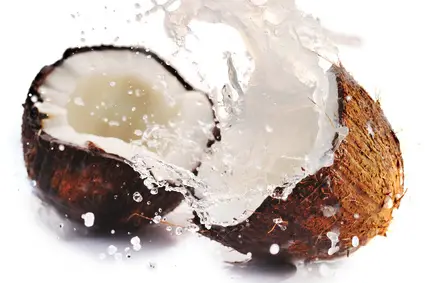
Few beverages on this planet are as bio compatible to the human body and its hydration needs as coconut water. Indeed, coconut water has been reported to have been used for intravenous hydration and resuscitation of critically ill patients in remote regions of the world for over half a century. [1] It is also an excellent preserving medium for avulsed teeth (and semen!), besting even Hank’s balanced salt solution, a commonly used medical solution. [2]
While some are concerned about the sugar content of this slightly sweet beverage, recent research shows it actually exhibits blood sugar lowering properties in an experimental model of diabetes. [3] Additional animal research shows coconut water prevents and reverses high blood pressureassociated with fructose feeding-induced hypertension, as well being able to reduce oxidative stress and insulin resistance. [4]
Perhaps one of the most amazing properties of coconut water is its superior lipid modulating activity in the animal model vis-à-vis the cholesterol-lowering statin drug known as lovastatin. [5] Which means we can, in clear conscience, modify Hippocrates’ famous saying to: “Let What You Drink Be Your Medicine.”
Other medicinal properties of coconut water include
- Anti-Ulcer Properties: Both coconut milk and coconut water exhibit potent anti-ulcer activity against chemicals such as indomethacin, a Non-Steroidal Anti-Inflammatory Drug (NSAID).
- Blood-Pressuring Lowering Properties: When human subjects consumed coconut water for two weeks, it was found to lower blood pressure in 74% of the experimental group, reducing it by up to 24 points (mmHg) systolic and 15 points (mmHq) diastolic.
- Anti-Alzheimer’s Properties: in an animal model of ovariectomy-induced menopausal changes, coconut water appeared to prevent the decline of brain estrogen (estradiol) levels, as well as the associated accumulation of Alzheimer’s disease associated β-amyloid (Aβ) plaque in their brains.
- Anti-Bacterial Properties: Three novel antimicrobial peptides have been identified in coconut water which exhibited inhibitory activity against both Gram-positive and Gram-negative bacteria.
- Anti-Gastroenteritis Agent: When sodium is added (ideally sea salt) coconut water has been determined to be an ideal rehydrating agent in countries where medical supplies are not freely available, and where, say, cholera and other severe forms of gastroenteritis persist.
Ultimately, coconut makes for an excellent alternative to sports drinks, which are increasingly comprised of synthetic ingredients. Also, coconut water is filtered by Nature through an intensive purification process — far safer than municipal systems which leave up to 600 toxic disinfectant by products behind. I’m nuts for the stuff (so much so that I will use a bad pun like this), how about you?
Make sure you check out the article on Wake Up World – 160 Uses for Coconut Oil
Subscribe to:
Comments (Atom)